As is the human body, so is the cosmic body.
As is the human mind, so is the cosmic mind.
As is the microcosm, so is the macrocosm.
As is the atom, so is the universe.
– The Upanishads
 This is about true beauty, not mere glamour, which is what has been passing for beauty. True Beauty (capital “B”) is eternal, not a passing phase or fashion. True beauty goes far beyond the form and appearance of things or people.
If all this sounds trite, and you are thinking to yourself “Well, of course,” look around. Glamour – the illusion, the appearance of things, has taken over. As one beauty commentator, John O’Donohue, put it, “It has become the habit of our times to mistake glamour for beauty.”
Glamour is the fast food we feed our souls – all easy flash and poor nourishment, empty calories. True beauty, on the other hand, nourishes us. Upon experiencing it we feel more alive, uplifted,inspired. We are fed.
Because of glamour’s ascendance in place of True Beauty many think beauty trivial, non-essential and consider its pursuit a shallow endeavor. So, sadly in our modern times “beauty” has become caricatured, trivialized and marginalized to an extreme and ridiculous point. The notion of beauty has been relegated to the shallows of the naive, romantic, and the cosmetics counter.
Meanwhile the culture (with the aid of a media that seems obsessed with bathroom humor, dystopian horror series and fear-mongering) elevates and enshrines coarseness, violence, and bad news. And of course glamour. Elegance, kindness, and graciousness are derided or written out, while mediocrity and baseness are somehow socially desirable.
Ironically, the lowest common denominator has become the highest thing to aspire to.
Okay, so what the heck is True Beauty?
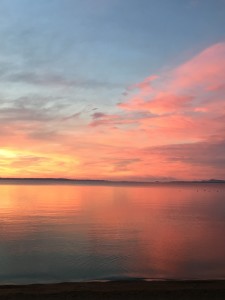
True Beauty is marked by those experiences that universally raise one up. Such experiences need not be dependent upon any particular cultural norms, language or education. Think sunlight hitting water. Or just sunlight! The sound of laughter. The harmony of human voices raised in song. These things are beautiful, truly.
And harmony is a key word here. True Beauty is an expression of harmony – any sort of harmony. It is not a matter of style, or taste, or a certain cultural preference.
True Beauty is a paradox that is far more complex – and simple – than (dare I say?) meets the eye. Most significantly, healing our relationship to Beauty will in turn heal much of the pathology that our culture is currently suffering. When talking about this Beauty we are talking cosmology, not cosmetology.
Consider this: polarizing dualities can’t exist and luscious diversity may unashamedly bloom in a Universe where True Beauty is a primary paradigm and one of humankind’s guiding references.
These are some of the reasons why True Beauty matters.
And it is not just a passive notion. Beauty is actionable. Just as we can choose how we nourish our bodies, we can choose how we nourish our souls, our whole selves and those around us as well, for true beauty choices and actions have impact beyond ourselves.
All contemporary crises can be reduced to a crisis about the nature of beauty.
~ John O’Donohue
[The above is excerpted from Lisa’s book “Beauty As Action,”]
